has/have และ has got/have got แปลว่า มี สามารถใช้แทนกันได้ มีความหมายเดียวกัน ในกรณีต่าง ๆดังนี้
has/has got และ have/have got แปลว่า “มี”
ใช้แทนกันได้
ใช้ในการแสดงความเป็นเจ้าของ (possession)
- I have a new bag. = I have got a new bag. ฉันมีกระเป๋าใบใหม่
- She has a dog. = She has got a dog. หล่อนมีสุนัข 1 ตัว
ใช้พูดถึงครอบครัว/ความสัมพันธ์ (relationship)
- I have a new girlfriend. = I have got a new girlfriend. ฉันมีแฟนคนใหม่
- Jim has twins, a son and a daughter. = Jim has got twins, a son and a daughter. จิมมีลูกแฝด ชาย 1 หญิง 1
ใช้พูดถึงอาการเจ็บไข้ได้ป่วย (illnesses)
- I have a headache. = I have got a headache. ฉัน (มีอาการ) ปวดหัว
- She has a stomachache. = She has got a stomachache. หล่อน (มีอาการ) ปวดท้อง
ใช้พูดถึงลักษณะทางกายภาพของคน สัตว์ สิ่งของ (characteristics)
- They have blue eyes. = They have got blue eyes. พวกเขามีดวงตาสีฟ้า
- His office has a beautiful view. = His office has got a beautiful view. สำนักงานของเขามีวิวที่สวยงาม
ข้อควรระวัง
(1) ถ้าเป็นเหตุการณ์ในอดีต (past tense) เราจะใช้ had (เพราะ had เป็นกริยาช่อง 2 ของ has/have) ไม่ใช้ ้had got เช่น
- I had a cold last week. ฉันป่วยเมื่ออาทิตย์ที่แล้ว
- He had two yellow cars when he was young. เขามีรถสีเหลืองสองคันเมื่อตอนเขาหนุ่ม ๆ
(2) คำย่อ ‘s หรือ ‘ve จะใช้ในกรณีที่เป็น has got/have got เท่านั้น ถ้าเป็น has/have เฉย ๆ ไม่สามารถอยู่ในรูปแบบย่อได้ เช่น
- I have got a new bag. = I‘ve got a new bag. (ไม่ใช้ I’ve a new bag. เพื่อย่อ I have a new bag.)
- She has got a dog. = She‘s got a dog. (ไม่ใช้ She’s a dog. เพื่อย่อ She has a dog.)
(3) เราไม่สามารถใช้ has got/have got แทน has/have ได้ ในกรณีที่เราพูดถึงการกระทำ (actions) กิจกรรม (activities) หรือประสบการณ์ (experiences) ต่าง ๆ เช่น
- I always have a dinner with my family. ฉันทานมื้อค่ำกับคนในครอบครัวทุกวัน (ไม่ใช้ I always have got a dinner with my family.)
- Timmy has a car accident. ทิมมี่ประสบอุบัติเหตุทางรถยนต์ (ไม่ใช้ Timmy has got a car accident.)
- Jane has a good time with her husband. เจนมีช่วงเวลาที่ดีกับแฟนของเธอ (ไม่ใช้ Jane has got a good time with her husband.)
วิธีการใช้
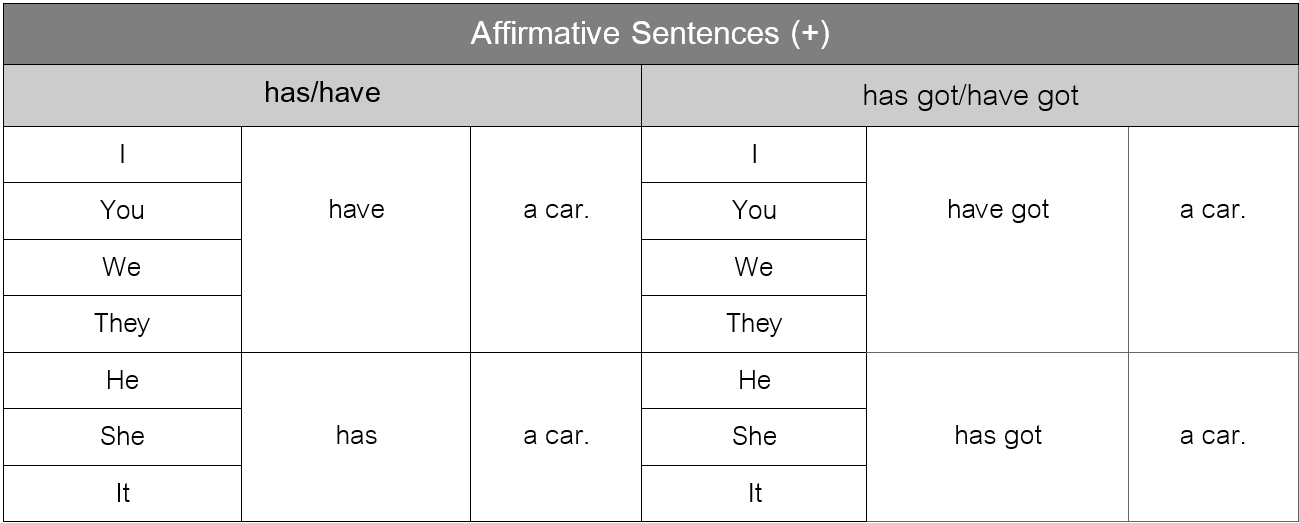
ประโยคบอกเล่า (Affirmative Sentences)
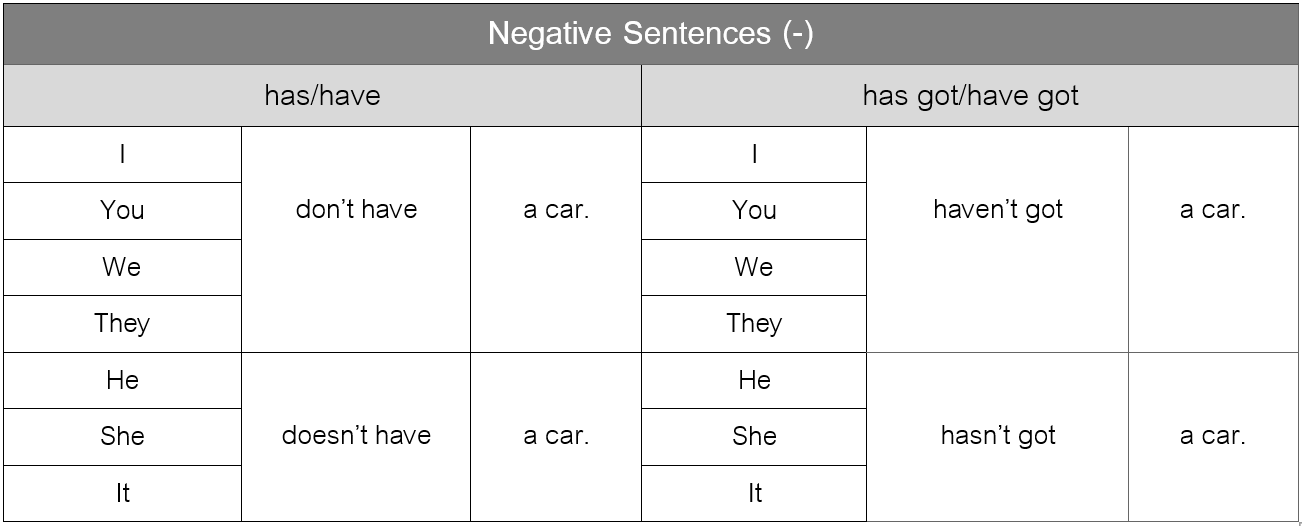
ประโยคปฏิเสธ (Negative Sentences)
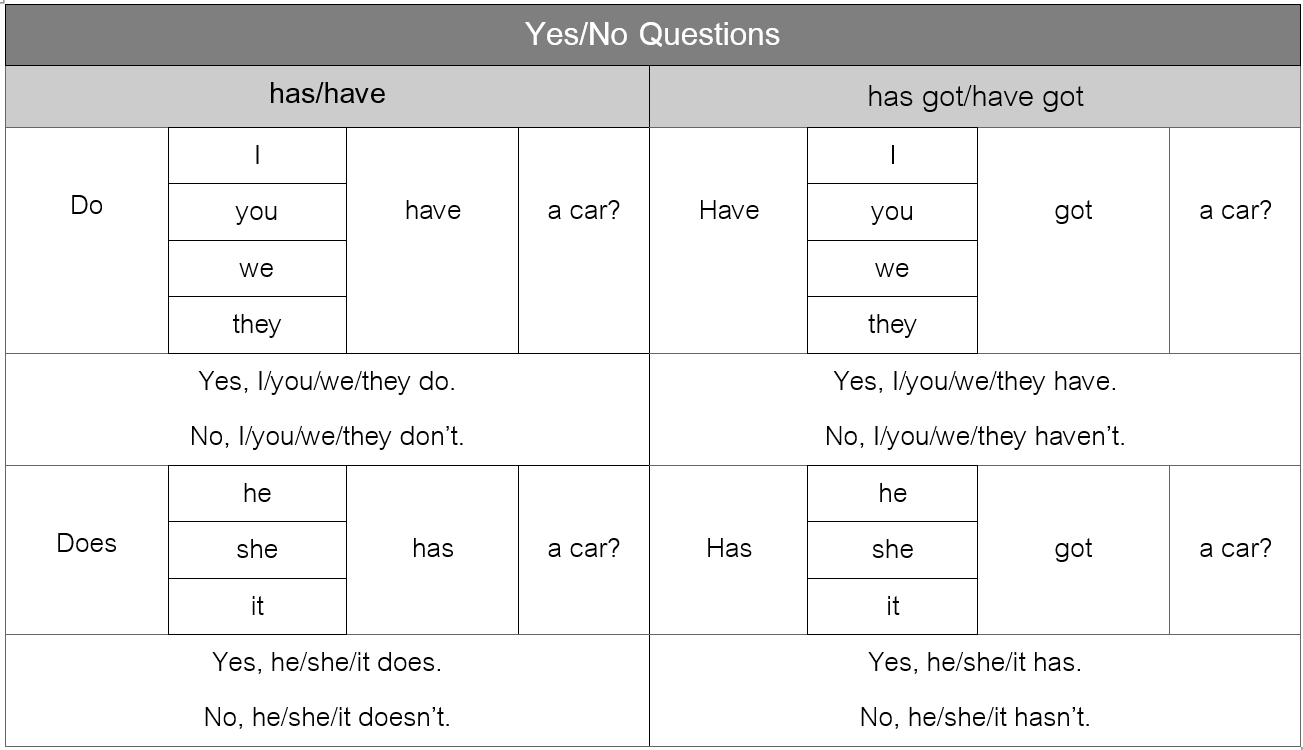
ประโยคคำถามแบบ Yes/No Question
ประโยคคำถามแบบเปิด
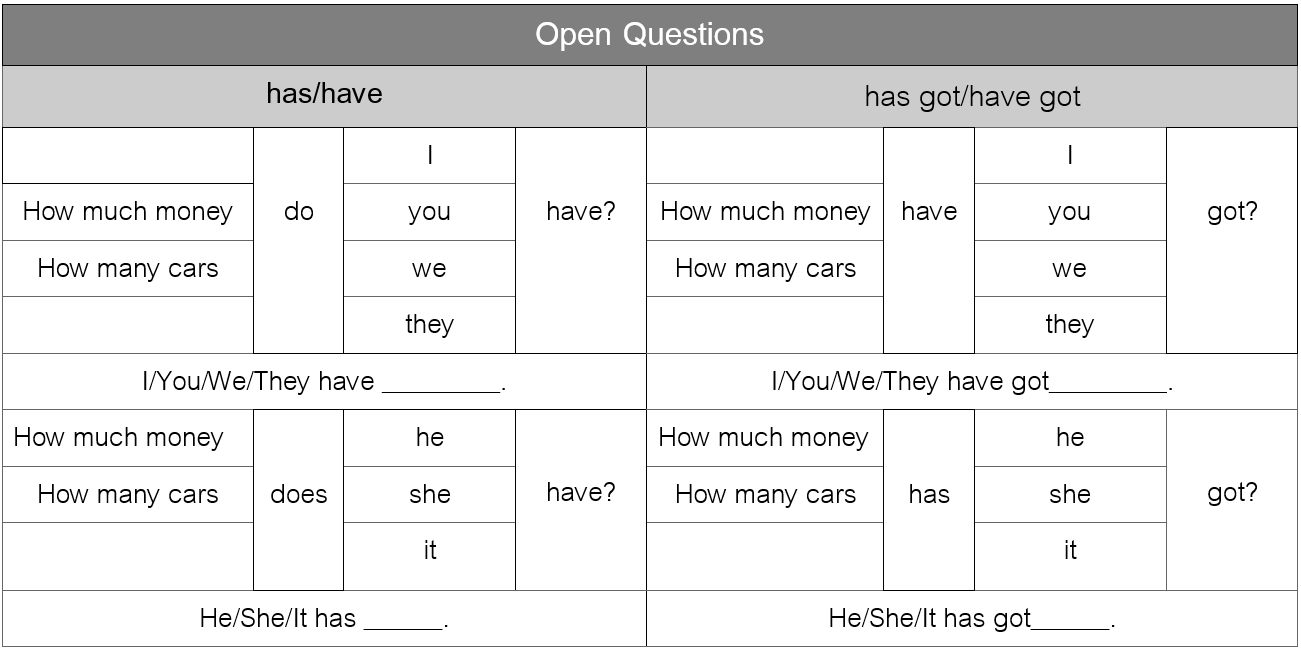
ลิงค์ทำแบบทดสอบ
- WorldWall: Have got/has got
- TestEnglish: Have got
- OxfordUniversityPress: Test 1: ‘Have got’
- WayGround: HAVE GOT or HAS GOT
- English4U: Have Got or Has Got – Exercise
- EnglishRoom: Have and Has – 01
- UsingEnglish: Quiz: Have or Has
- WayGround: Have Has
- WorldWall: have / has




 Reading Across
Leave a reply to Natsuda op-on Cancel reply